


Death Worm™
4.710.65K Reviews
App Specs
- Version
- 3.0.021
- Updated On
- License
- Free
- Downloads
- 50,000,000+
- Developer
- PlayCreek Games
- Categories
- Arcade
- Platform
- Android
Screenshots



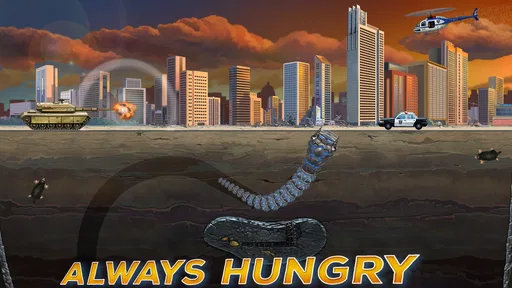
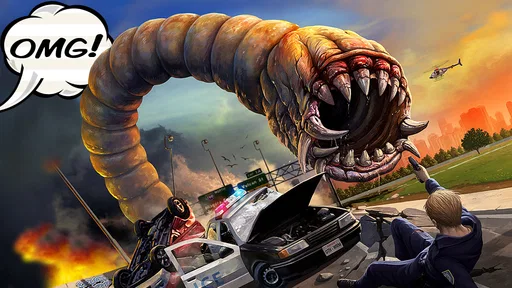
 Analysis by AppCompare
I expected a simple arcade distraction, but Death Worm™ quickly showed me why this kind of game can hold attention far longer than its premise suggests. I control a huge underground creature, burst through the ground, and hunt targets above and below the surface while trying to keep a run alive. The idea is immediately readable, yet the timing becomes surprisingly demanding once enemies, hazards, and opportunities start arriving together.
That directness is the game’s biggest strength. I do not need a long tutorial or a complicated menu system to understand the basic appeal. It is a free arcade game from PlayCreek Games, available for players using Android 5.0 or later, with a Teen content rating. Its long life is reflected in its reach: it has passed 50 million installs, carries a 4.7 average from around 345 thousand ratings, and has accumulated roughly 11 thousand written reviews.
The important question is whether that popularity translates into a good experience today. In my view, it does, especially if you want short sessions built around movement, reaction, and controlled destruction. It is less suitable if you are looking for a story-heavy adventure, a calm puzzle game, or a carefully explained progression system. The appeal is physical and immediate: dive, surface, strike, escape, and repeat.
Why the first few runs feel so immediate
The opening impression comes from the control fantasy rather than from exposition. I am not guiding a soldier through a maze or tapping a character through a conventional platforming course. I am the threat beneath the ground. That reversal gives every early action a satisfying purpose, because movement itself becomes the attack.
The game works best when I treat the surface as a temporary hunting ground rather than a safe place to remain. Bursting upward can catch targets by surprise, but staying exposed creates its own problems. A successful run depends on reading what is nearby, choosing when to emerge, and returning underground before the situation becomes too crowded or dangerous.
This makes the first few minutes easy to understand but not entirely easy to master. A new player can enjoy the spectacle right away, while a more experienced player starts noticing the difference between a reckless attack and a well-timed one. That distinction gives the arcade structure some welcome depth without burying it under rules.
I also appreciate how quickly the game communicates failure. When a run ends, I usually understand that I mistimed a launch, ignored a threat, or chased one target too long. There is little ambiguity about what went wrong. That clarity matters in a score-focused arcade game because it encourages another attempt instead of making the player feel lost.
Worth Reading Before You Choose

EA SPORTS FC Mobile 26 Is a Bigger Football Game, but It Takes Time

Flipboard Shows What News Apps Must Do Beyond the Feed

Switching to Android Auto Means Rethinking Your Driving Routine

Google Calendar Makes a Crowded Week Easier to Manage

Ludo King Makes the Most of the Minutes Between Plans

Baby Panda World Brings Quick Play to Modern Phones, but Its Game Library Feels Busy
One practical tip is to resist the urge to attack every visible target. The most tempting object on screen is not always the safest one to pursue. I get better results when I scan the immediate area first, decide where I want to surface, and keep an exit route in mind. That small habit changes the game from random thrashing into deliberate ambush play.
A setting built around contrast
The visual identity depends on a strong contrast between the ordinary world above ground and the exaggerated monster moving beneath it. The setting feels recognizable enough for the destruction to make sense, but stylized enough that the game never tries to present itself as a serious simulation. That balance supports the playful menace at the center of the experience.
The art direction also helps me understand the action at a glance. The worm’s movement needs to be readable during fast attacks, and the environments need to provide enough visual separation for targets and hazards to stand out. When the screen becomes busy, the game’s exaggerated shapes and clear action language do useful work.
What I find effective is the way the setting turns movement into mood. Underground travel feels like preparation, while surfacing creates a sudden burst of chaos. The game does not need lengthy narrative explanation to establish that relationship. The landscape is there to be interrupted, and the creature’s presence changes its meaning whenever it erupts into view.
This is also where the game differs from many conventional arcade alternatives. A typical endless runner asks me to move through a route while avoiding obstacles. Here, I am not simply surviving a path. I am creating the disruption and then dealing with the consequences. That gives the setting a more active role in the play loop.
The trade-off is that players who prefer detailed environments or a realistic world may find the presentation too broad and cartoon-like. The visual style serves speed and clarity more than subtle environmental storytelling. I think that is the correct choice for this game, but it does mean the atmosphere depends on playful exaggeration rather than visual realism.
How sound and rhythm shape the mood
The game’s mood comes from the contrast between anticipation and release. Underground movement creates a sense of waiting, then surfacing turns that quiet buildup into a quick attack. Even without relying on complicated narrative cues, the rhythm tells me when I am preparing and when I am committing.
That rhythm is important because the game could easily have become a repetitive sequence of random jumps. Instead, the strongest moments have a recognizable pattern: I identify a target, approach from below, break through the surface, collect the reward or damage the opponent, and immediately think about the next position. The pacing comes from those decisions rather than from long pauses.
The sound design supports the game’s exaggerated personality. Actions feel more satisfying when the audio reinforces the difference between travel, impact, and danger. I do not experience the worm as a silent cursor moving around a level; I experience it as a heavy, disruptive presence. That makes even short attacks feel like events.
For everyday play, this rhythm makes the game easy to fit into small gaps. I can play during a short break, stop after a run, and return later without needing to remember a complicated plot or a large inventory. At the same time, the quick restart loop can become intense if I keep chasing a better attempt. The game encourages “one more run” behavior because every failure feels close enough to correct.
My advice is to play with audio when possible, at least while learning the timing. Visual information remains essential, but sound helps give attacks and movement a stronger sense of weight. If I play silently, the action still works, yet some of the personality and anticipation are reduced.
Where the mechanics reward patience
The central mechanic is simple: control the giant worm, move through the underground space, and attack enemies from below. The simplicity is not a weakness by itself. It gives the game a clean foundation, and the challenge comes from using that foundation under pressure.
The most useful mental shift is to think in arcs rather than isolated taps. I am not merely trying to reach the next target. I am planning a route that lets me attack while preserving enough control to avoid immediate retaliation. That makes positioning more important than frantic input.
A second useful technique is to separate hunting from escaping. When I surface, I should already have an idea of where I want to go next. Waiting until danger is directly on top of me often produces a panicked movement that wastes the opportunity. Planning the retreat before the attack makes the worm feel more powerful and makes my runs last longer.
The game’s arcade design also makes risk management central. A safe move may produce a modest result, while a deeper attack can offer greater excitement and a better payoff but leaves less room for correction. I enjoy that trade-off because it gives experienced players something to refine without turning the controls into a technical chore.
Compared with a conventional action game, the emphasis is unusual. There is no need to manage a broad set of weapons or abilities in every moment. Compared with a standard runner, the player has more agency over the direction of danger. Compared with a physics sandbox, the game is more focused and goal-oriented. It sits between those styles, using a single strong fantasy to support repeated arcade attempts.
That focus can also expose its limitation. If you need a large variety of mechanics to stay interested, the core loop may eventually feel narrow. The pleasure comes from improving timing and decision-making, not from constantly unlocking a completely different way to play. I would choose another game if my priority were deep character customization, a substantial campaign, or a rich narrative journey.
What the current version means for new players
The current version is 3.0.021, and the game remains free to start. Optional in-app purchases range from $0.99 to $99.99 per item, so I would recommend checking the purchase flow carefully if you are handing the device to a younger player. The free entry point makes it easy to test the controls before deciding whether the long-term loop suits you.
Because the game has a Teen rating, parents should consider whether its monster-focused action and presentation fit the player using the device. It is not a gentle preschool-style arcade title. The exaggerated tone keeps it playful, but the premise and action are still aimed at an older audience.
For a first session, I would not focus on chasing the highest possible result. I would spend a few runs learning how quickly the worm changes direction, how long it is safe to remain exposed, and which attacks leave me with a clean escape. This approach reveals the game’s real appeal faster than trying to play aggressively from the beginning.
Another practical use case is short-form stress release. After a long commute or between tasks, the game gives me a quick way to concentrate on immediate decisions. It is more active than a passive time-killer, but it does not demand the uninterrupted commitment of a large role-playing game. That makes it a good fit for players who enjoy compact sessions with a clear beginning and end.
On the other hand, I would skip it if I dislike repeating attempts after failure. The structure depends on replaying the same basic fantasy and gradually becoming more controlled. Players who want constant narrative progress may interpret that repetition as a lack of content, even though arcade fans will recognize it as the point.
The atmosphere works because the mechanics stay visible
The strongest part of the presentation is that the art, sound, and pacing do not distract from the controls. They make the worm feel larger, more dangerous, and more entertaining, but I can still understand why a run succeeds or fails. That is a difficult balance for a game built around spectacle.
The mood is mischievous rather than grim. The creature is destructive, but the overall presentation treats that destruction as a playful arcade performance. This tone prevents the setting from becoming unpleasant while still giving every attack a sense of impact. I find it easier to return to because the game is energetic without demanding emotional investment in a serious story.
The atmosphere also changes according to my performance. When I move carefully, the game feels like a stalking exercise: locate, wait, strike. When I become reckless, it turns into frantic damage control. The same basic environment can therefore produce different moods depending on how I approach each run.
That connection between mood and mechanics is one of the less obvious reasons the game remains memorable. The worm is not merely a visual theme placed on top of an arcade system. Its underground movement explains the rhythm, its size explains the impact, and its vulnerability during attacks creates the tension. The fantasy and the rules support each other.
I would still like more variety if I were playing for long uninterrupted periods. The focused design is excellent for quick sessions, but it can feel less generous when I want a broader adventure. This is not a flaw that ruins the experience; it is a boundary worth understanding before downloading. The game is strongest as a compact arcade loop, not as a replacement for a full-scale action campaign.
Who should play it and who should look elsewhere
I recommend it to players who enjoy unusual control fantasies, quick restarts, and games where mastery comes from timing rather than from complicated menus. It is especially appealing if you like attacking from unexpected angles and turning movement into a weapon. The free price makes the decision easier: you can try the central loop without committing money at the outset.
It is also a good choice for someone who wants a game that can be understood in seconds but refined over many attempts. A younger player within the Teen rating may enjoy the exaggerated monster premise, while an experienced arcade player can appreciate the positioning challenge beneath the simple controls.
I would point a different way for players who want a peaceful experience, a cooperative campaign, or a story that unfolds through dialogue and exploration. I would also be cautious about recommending it to anyone who becomes frustrated by repeated failure or who expects every new session to introduce a radically different system. Its satisfaction comes from sharpening the same set of decisions.
Before installing, I would consider two practical questions. Do you enjoy replaying a short action loop to improve your timing? And are you comfortable with optional purchases being present in a free game? If the answer to both is yes, the game has a strong chance of fitting your habits. If not, a premium arcade title with a fixed price may feel less distracting, while a narrative adventure may offer more lasting variety.
My final atmosphere verdict
Death Worm™ succeeds because its presentation and mechanics point in the same direction. The setting makes underground movement meaningful, the sound and pacing give attacks a strong sense of release, and the arcade structure keeps the experience easy to pick up. I never need to wonder what the game wants me to feel: it wants me to stalk, erupt, cause trouble, and try again.
My main reservation is the same quality that makes it effective: the focus is narrow. If the giant-worm fantasy and repeatable attack loop do not appeal to you, polished presentation will not change that. But if you enjoy compact games with a clear identity, the combination of readable action and playful destruction remains convincing.
For me, this is best installed as a reliable short-session arcade game rather than treated as a massive adventure. I can open it when I have a few minutes, learn from a failed run, and feel that the next attempt is worth making. That is a modest promise, but the game fulfills it unusually well. Its coherent mood gives the simple mechanics character, and its mechanics keep the mood from becoming empty decoration.
Pros
- Simple controls make the game easy to pick up and play.
- Short levels work well for quick gaming sessions.
- Many environments keep the destructive gameplay visually varied.
- Upgrades add progression and make the worm feel increasingly powerful.
- Offline play is useful when you have no internet connection.
Cons
- Frequent explosions and effects can make the screen feel visually crowded.
- The gameplay may become repetitive after extended sessions.
- Some upgrades and content may require in-app purchases.
- Ads can interrupt the experience
- depending on the version and settings.
- The cartoon violence may not appeal to younger children or all players.
FAQs for Death Worm™
What is Death Worm™ and how is the gameplay structured?
Death Worm™ is an arcade action game in which you control a giant underground worm and attack enemies from below. You burrow through the ground, leap into the air, eat creatures, destroy vehicles, and cause as much chaos as possible. The gameplay is fast, simple to understand, and focused on short missions, score chasing, upgrades, and increasingly difficult enemy encounters.
Is Death Worm™ free to download and play?
Death Worm™ may be available as a paid download or through a version with optional purchases, depending on the platform and region. Before installing, check the current Google Play or App Store listing for the exact price, advertising information, and in-app purchase details. The store page is also the best place to confirm whether the version you are downloading is the official release.
Does Death Worm™ require an internet connection?
The main arcade gameplay in Death Worm™ is generally designed for offline play, which makes it convenient for short sessions while traveling or when mobile data is unavailable. However, certain features may depend on platform services, advertisements, purchases, updates, or online leaderboards. It is worth launching the game once while connected so that required files and services can initialize correctly.
Is Death Worm™ suitable for children?
Death Worm™ uses cartoon-style violence and exaggerated destruction rather than realistic graphics. The objective is to eat creatures and attack enemies, so some parents may still consider the premise unsuitable for younger children. The controls are easy to learn, but difficulty and fast action can become challenging. Review the age rating, advertising policy, and purchase settings before allowing children to play.
What devices are compatible with Death Worm™, and does it work well on older phones?
Death Worm™ is built around straightforward arcade mechanics and usually runs comfortably on many modern Android and iOS devices. Actual compatibility depends on the operating system version, device hardware, available storage, and the current app release. On older phones, performance may vary during busy scenes, so check the official store requirements and keep enough free space for installation and future updates.


